
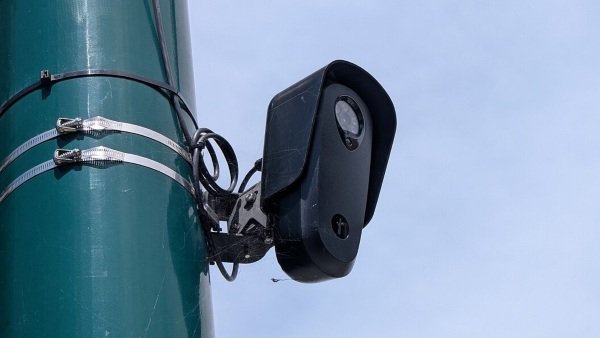
LITTLETON, Mass.- Town officials have moved to cancel Littleton’s contract with Flock Safety after discovering that five automated license plate reader cameras on public roads had been reactivated without notification to the town.
According to a town update published July 30, Select Board Chairman Gary Wilson requested that the Littleton Police Department verify the status of the town’s Flock Safety camera system. During that review, officials found that five cameras installed on Littleton public ways had been reactivated by Flock Safety without notifying the town.
Town officials said no data collected by the cameras was shared with other jurisdictions while the devices were powered. They also stated that the Littleton Police Department did not access any data gathered by the cameras during that time.
After learning the cameras had been reactivated, the Select Board directed the Littleton Electric Light and Water Departments (LELD) to disconnect power to each device. LELD later confirmed that all affected cameras had been powered down.
The Select Board also instructed Town Counsel to begin terminating the town’s contract with Flock Safety and directed the town administrator to coordinate with the Department of Public Works to remove all six cameras installed on public ways.
The decision follows months of public debate over the camera program. In May, the Select Board ordered the six cameras temporarily powered down while officials reviewed the technology, governance policies, and privacy concerns raised by residents. At the time, the town said it would determine whether to continue, modify, suspend, or discontinue the program after completing its review.
The town’s July 30 announcement did not explain how long the five cameras had been reactivated before they were discovered or why they had been turned back on. Officials said only that Flock Safety had reactivated the cameras without notifying the town.
Flock Safety provides automated license plate reader (ALPR) systems used by law enforcement agencies and municipalities to capture images of vehicle license plates and other identifying characteristics, such as vehicle make, model, and color. According to the company, the technology is intended to help locate stolen vehicles, identify vehicles connected to criminal investigations, and assist in public safety investigations. Critics, however, have raised concerns about privacy, data retention, and the potential expansion of surveillance through networks of interconnected cameras.
Subscribe to The Shrewsbury Post Updates